
Why the Godavari is sacred
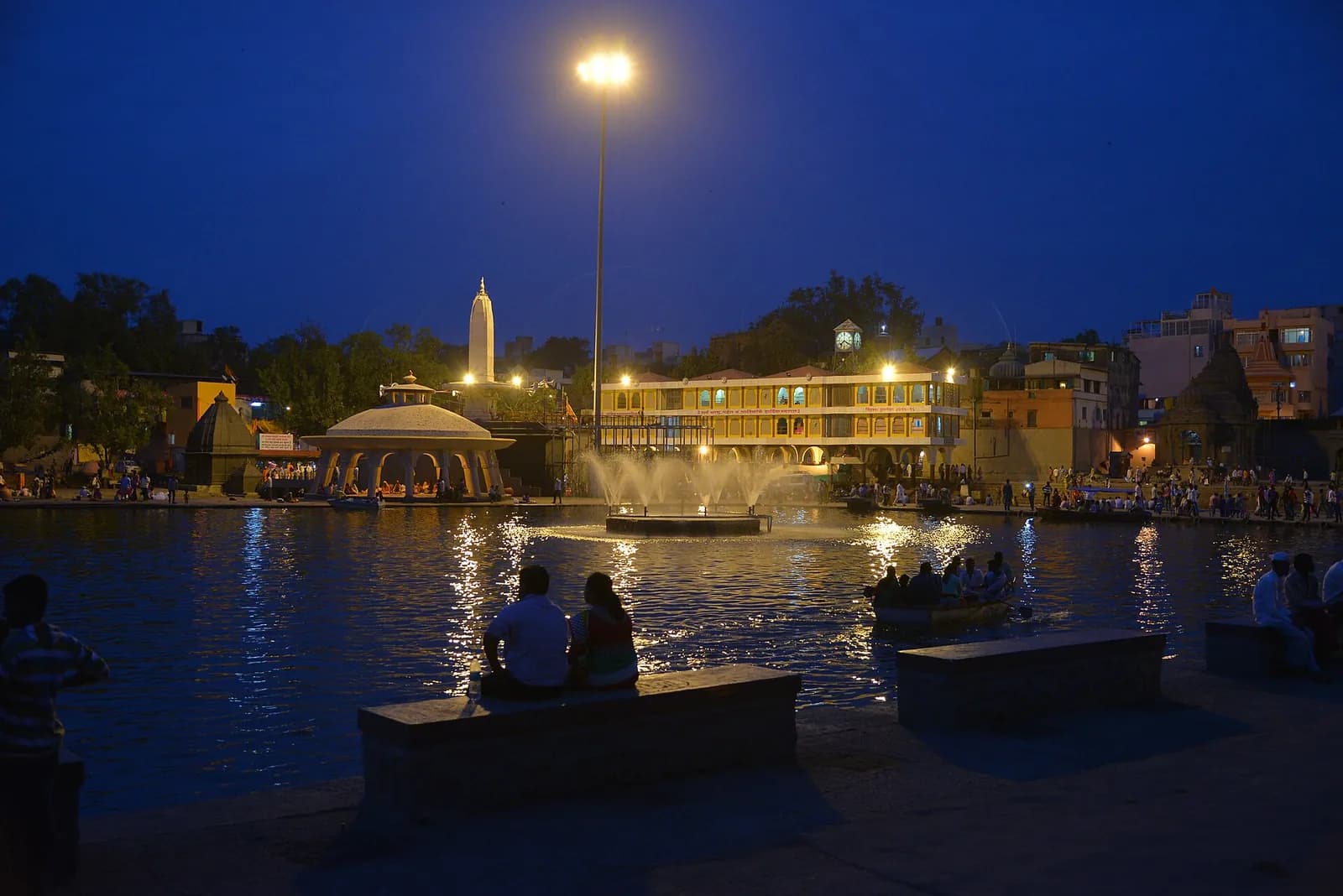
The Dakshin Ganga
The Godavari is often called the Dakshin Ganga, the Ganga of the south. It is one of India's longest rivers, flowing roughly 1,450 km east from the Western Ghats across Maharashtra, Telangana and Andhra Pradesh to the Bay of Bengal.
It rises on the Brahmagiri hill near Trimbakeshwar, only a short distance from the Arabian Sea coast, and crosses almost the whole width of the peninsula.
The legend of Gautama
Tradition holds that the sage Gautama lived on Brahmagiri. When he was accused of causing the death of a cow, he prayed to Lord Shiva to bring the Ganga down to purify the land. Shiva granted his prayer, and the river that flowed from Brahmagiri became the Godavari, also called Gautami after the sage.
This is why Trimbakeshwar, with its Jyotirlinga and Kushavarta Kund, is so closely tied to the river's holiness.
📅 Amrit Snan 2027: 2 Aug · 31 Aug · 11 Sept · 12 Sept · see the calendar
Sacred places on its banks
At Nashik the river flows past Ramkund and the ghats of Panchavati, where Lord Rama is said to have bathed. Further downstream it passes many pilgrimage towns, and in Telangana and Andhra Pradesh it hosts the Godavari Pushkaram, another festival held about once every twelve years.
Why bathe during the Simhastha?
Devotees believe that a dip in the Godavari during the Simhastha, and above all on an Amrit Snan day, is especially purifying, because the river is believed to hold the power of the amrit at that time.
Caring for the river
Millions of people bathing in one river puts it under great strain. Please do not use soap or shampoo in the river, take plastic back with you, put flowers and offerings only in the places provided, and follow the clean-ghat instructions of the authorities.
Ready to go? Turn this into a day plan.
✨ Plan thisKumbh Path explainers are written for general guidance. For official rules and timings, follow government notices.