
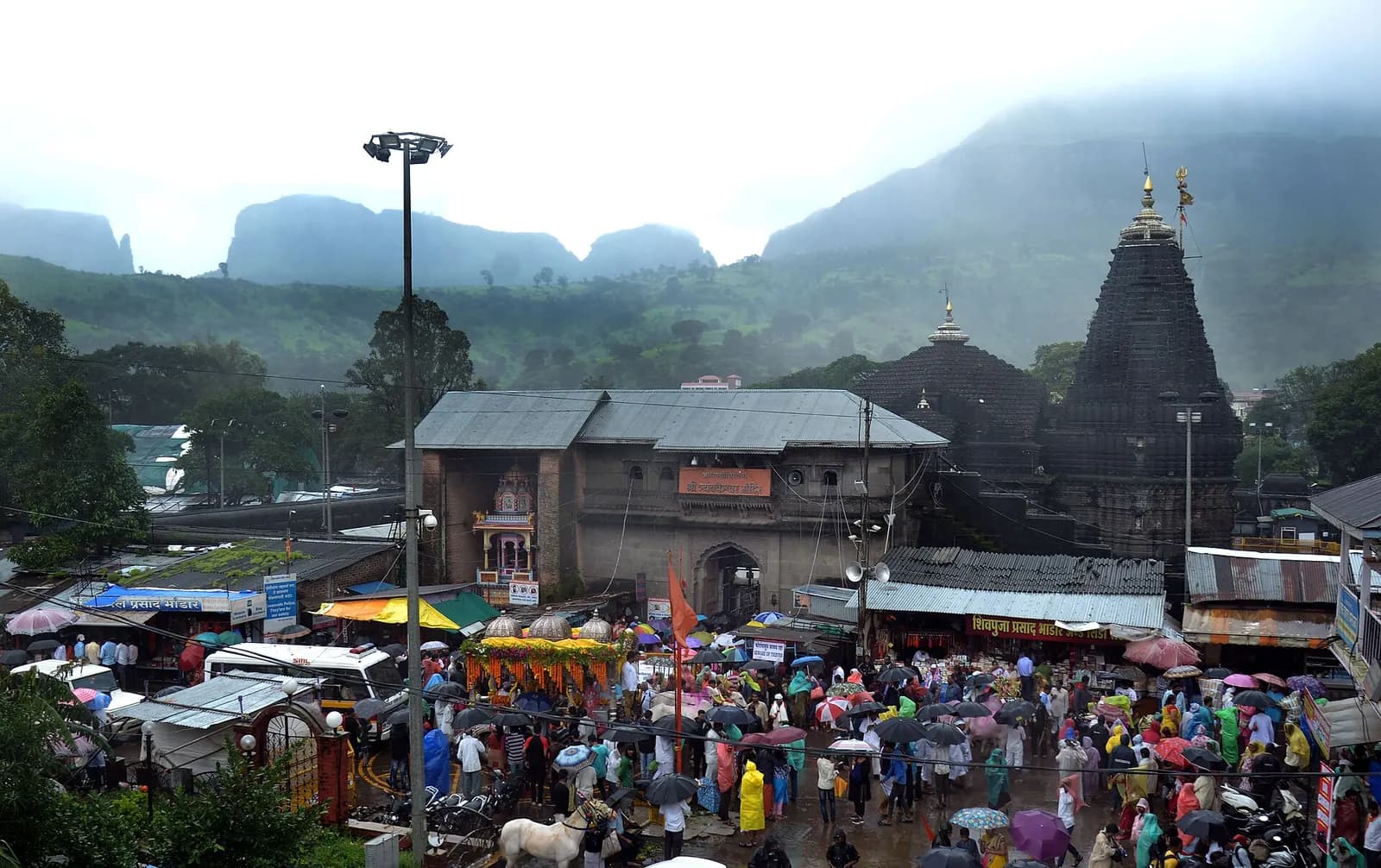
TempleVerified
Trimbakeshwar Jyotirlinga
One of the 12 Jyotirlingas
Best time: early morning · Trimbakeshwar
Source tirtha of the Godavari, Trimbakeshwar.
About
Kushavarta Kund in Trimbakeshwar is revered as the place where the Godavari reappears after rising on the Brahmagiri hill.
During the Simhastha, the Shaiva akhadas take their Amrit Snan here. The kund is compact, so crowd control on snan days is strict.
Long ago, the story goes, the sage Gautama lived with his wife Ahalya on the Brahmagiri hill above Trimbak. When a terrible drought struck the land, Gautama undertook a long and severe penance.
Pleased with him, Shiva released the Ganga to flow down to the earth here, and she came as the Godavari. Tradition also says Gautama bathed in her waters to cleanse himself of the sin of having killed a cow by accident. This is why the Godavari is called the Ganga of the South.
The river rises on Brahmagiri, slips out of sight and, by Hindu belief, comes up again in this tank, so Kushavarta is honoured as the point where the Godavari begins its journey across India.
The name comes from kusha, the sacred grass. Gautama is said to have held the river here with a ring (avarta) of kusha grass.
The stone tank with its cloisters was built in the 18th century by Shrimant Sardar Raosaheb Parnerkar, the Fadnavis of the Indore state. Look for the busts of him and his wife on the edge of the kund.
Trimbak is the older of the two Simhastha sites. Until 1789 the whole fair was held here, and the Shaiva akhadas still regard Trimbak as its true home.
In 2027 the Shaiva akhadas take their final Amrit Snan here on 12 September, a day after the Vaishnava snan at Ramkund. The kund is small, so entry on snan days is tightly controlled.
Did you know?
Sage Gautama is said to have stopped the Godavari here with a ring of sacred kusha grass, giving the kund its name.
The river rises on Brahmagiri hill, disappears and is believed to resurface in this tank, so a dip here equals bathing at the source.
The stone tank and its cloisters were built in the mid-18th century and are still used for every Simhastha.
During the Simhastha, the Shaiva akhadas take their Amrit Snan here, while Vaishnava akhadas bathe at Ramkund.
Puja & seva
A holy dip and puja at the kund. On Amrit Snan days the Shaiva akhadas bathe here first.
Utsav
Mahashivratri
Phalgun (February–March)
Shravan Mondays
July–August
Amrit Snan days
Simhastha 2027 (see Calendar)
Before you go
FAQ
Usually yes, from early morning to evening. It is sometimes closed for cleaning or repairs, so check locally before you travel.
About a five-minute walk along the main road of Trimbak town.
Yes. There are separate changing areas around the kund.
One of the 12 Jyotirlingas
Best time: early morning · Trimbakeshwar
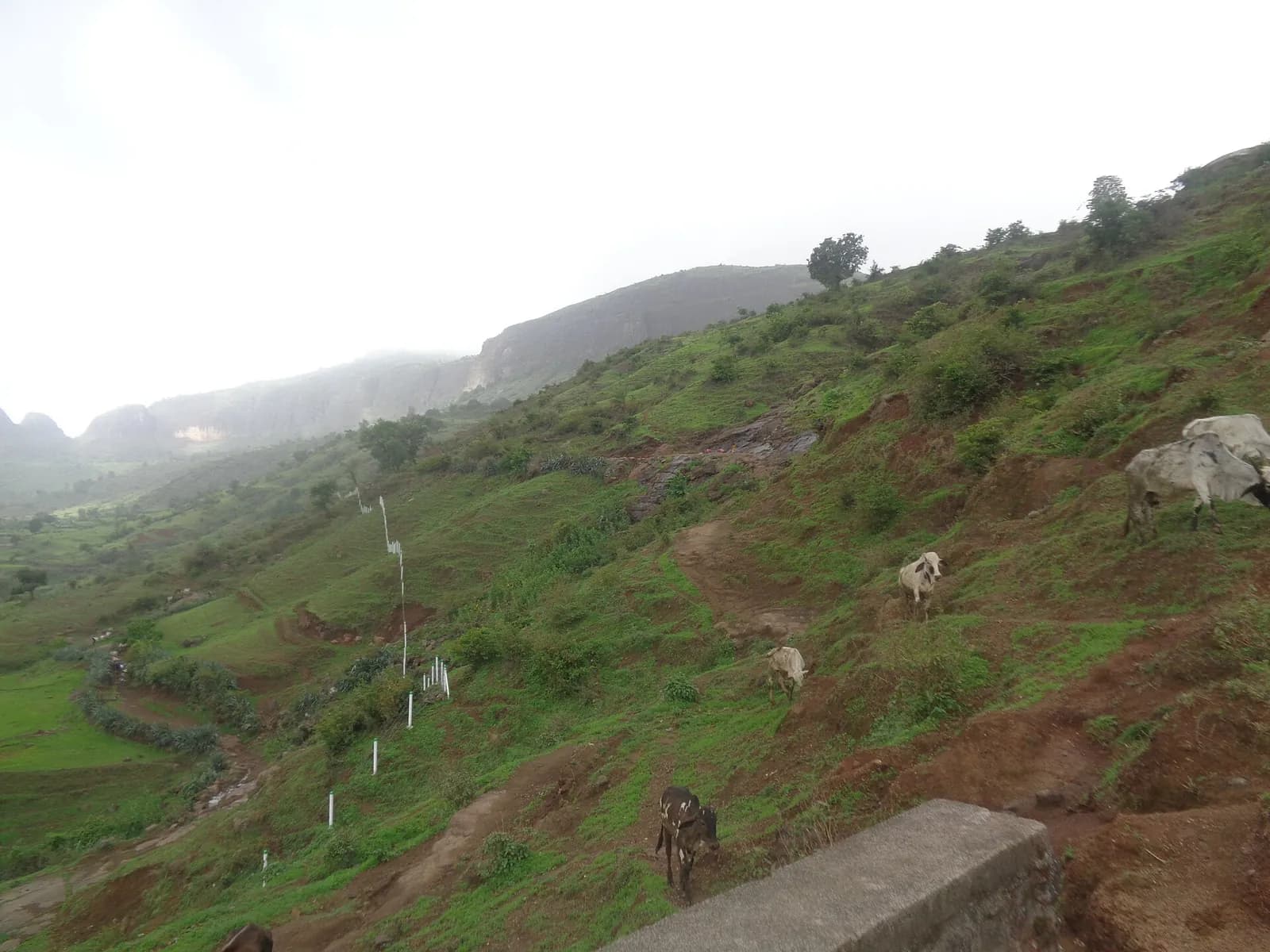
Hill linked to the birth of Hanuman
Best time: morning, dry weather · Trimbakeshwar