
Centuries of Kumbh history
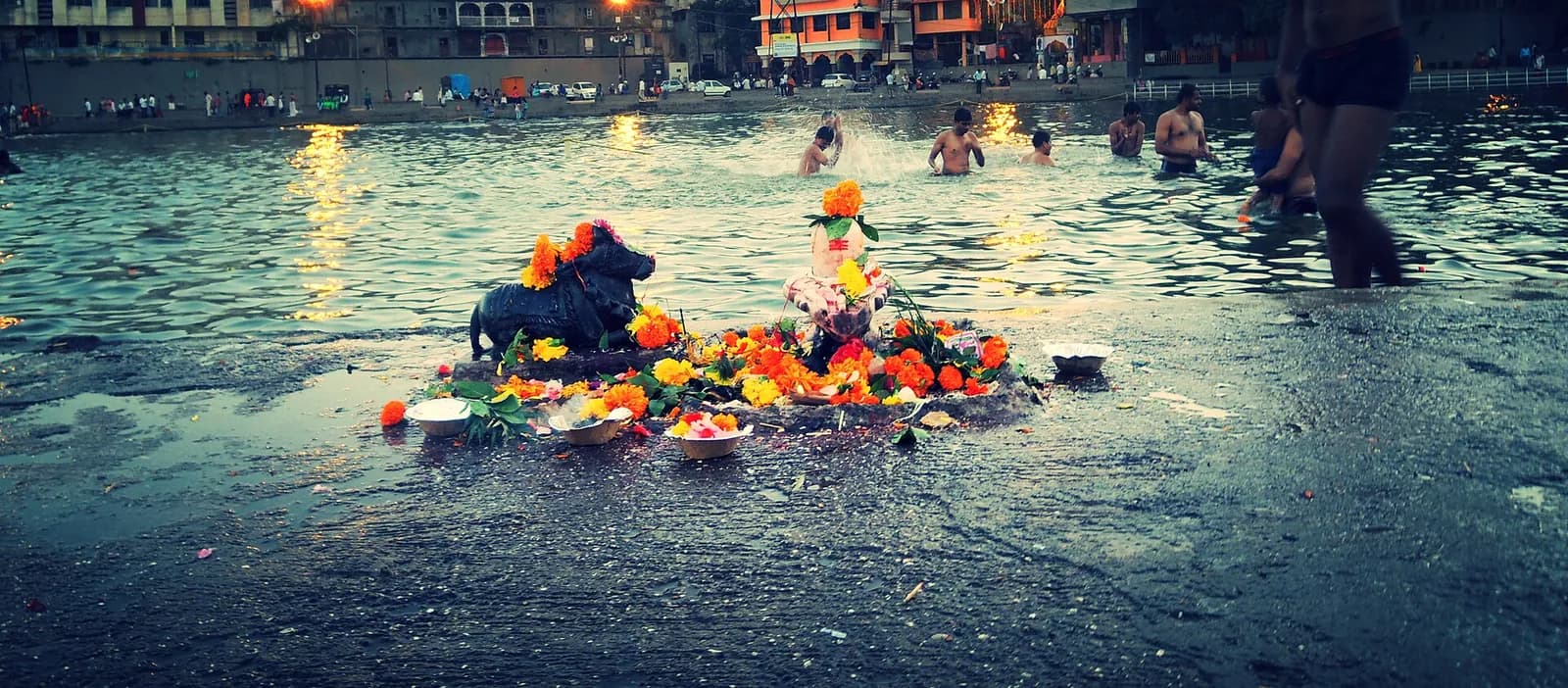
Ancient roots
Bathing at sacred rivers on auspicious days is an ancient Indian practice, mentioned in many old texts. The story of the churning of the ocean and the pot of amrit gives the Kumbh its name and meaning.
The Chinese traveller Xuanzang, who visited India in the 7th century, described a great gathering at Prayag under King Harsha. It is often cited as one of the earliest written accounts of such a mela.
The role of the akhadas
Tradition credits Adi Shankaracharya with organising monastic orders and encouraging regular gatherings of sadhus. Over the centuries the akhadas became the centre of the Kumbh, with their processions and Amrit Snans at its heart.
📅 Amrit Snan 2027: 2 Aug · 31 Aug · 11 Sept · 12 Sept · see the calendar
Why the Nashik Kumbh has two bathing places
The Nashik Simhastha is shared between Nashik and Trimbakeshwar. It is commonly said that after clashes between Shaiva and Vaishnava groups in the 18th century, the Peshwa administration of the time arranged separate bathing places: Vaishnavas at Nashik and Shaivas at Trimbakeshwar. The arrangement continues today.
The modern Kumbh
Today the Kumbh is planned years in advance by the state government, district administration, police and municipal bodies, with temporary townships, roads, bridges, hospitals, water supply and sanitation built for millions of visitors.
The last Nashik Simhastha was held in 2015–16. In 2017 UNESCO listed the Kumbh Mela as an Intangible Cultural Heritage of Humanity.
The 2026–28 Simhastha
The coming Simhastha opens on 31 October 2026 and runs until 24 July 2028, with its main Amrit Snans in August and September 2027. Large works around Ramkund, the ghats and the city are under way to prepare for it.
Ready to go? Turn this into a day plan.
✨ Plan thisKumbh Path explainers are written for general guidance. For official rules and timings, follow government notices.