
The heart of the Kumbh: famous temples around Nashik
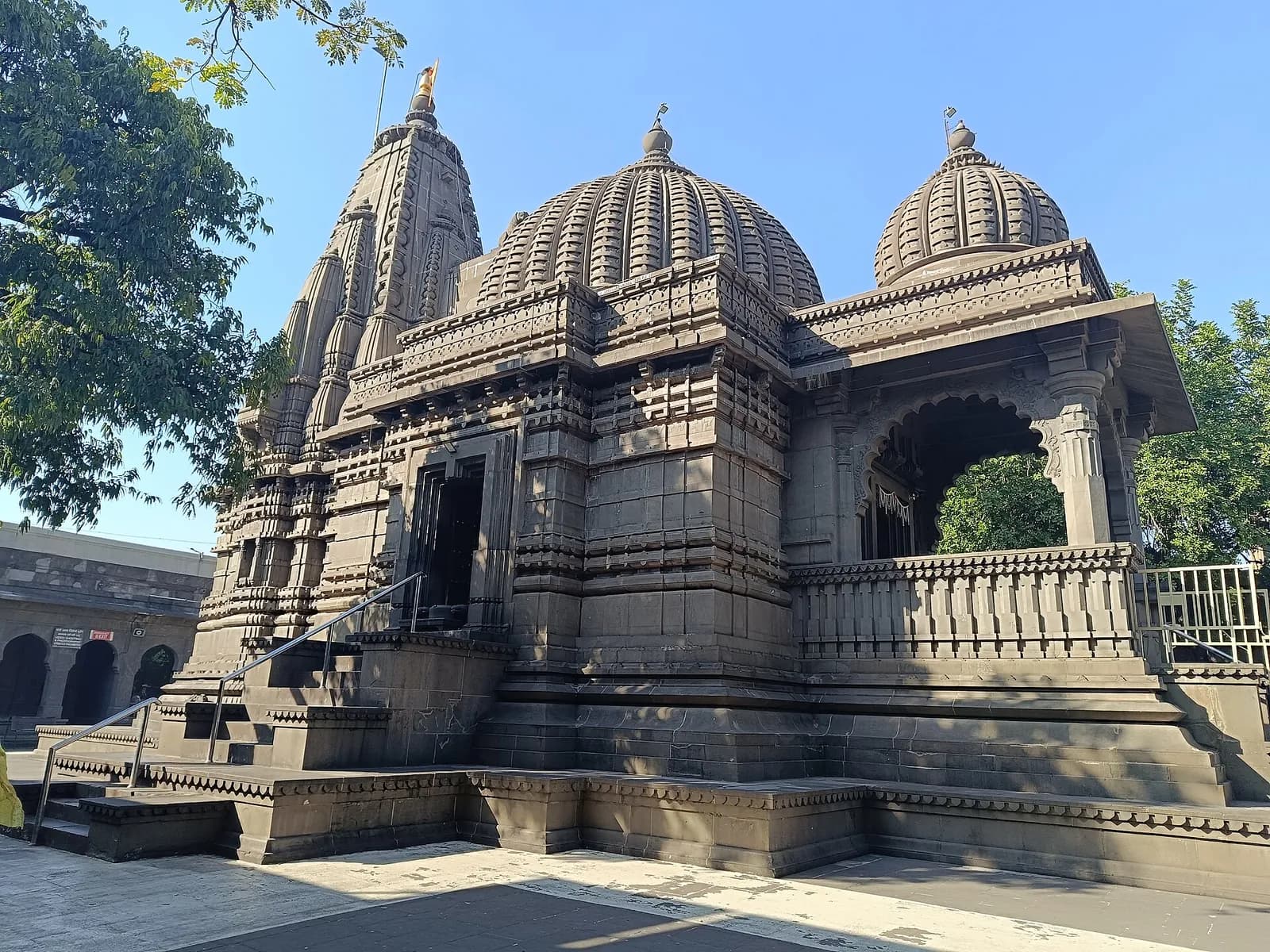
Kalaram Mandir
Panchavati's best-known temple is named after its black-stone (kala) image of Lord Rama. The present temple was built in the late 18th century, funded by Sardar Rangarao Odhekar, and its dark stone walls and tall shikhara are a landmark of the old town.
Kalaram Mandir also has a place in modern history: in 1930 Dr B. R. Ambedkar led a satyagraha here demanding temple entry for Dalits.
Kapaleshwar Mandir
Facing Ramkund across the steps, Kapaleshwar is one of Nashik's oldest Shiva temples. Unusually, it has no Nandi bull in front of the shrine. Local tradition explains that here Nandi is honoured as Shiva's guru, and so does not sit before him as a devotee.
📅 Amrit Snan 2027: 2 Aug · 31 Aug · 11 Sept · 12 Sept · see the calendar
Sita Gufa
A small cave shrine in Panchavati linked by tradition with Sita during the exile. The entrance is low and narrow, and you go down a few steps into the cave, so it is not easy for elderly visitors or anyone who dislikes tight spaces.
Sundarnarayan and Naroshankar temples
Near Ramkund stand two 18th-century temples that are easy to miss. Sundarnarayan, dedicated to Vishnu, is said to be aligned so that the rising sun lights the images around the spring equinox in March.
The Naroshankar temple, a Shiva temple on the river bank, is known for its richly carved stone and its great bell; locals say the bell's sound once carried across the city.
Muktidham, Nashik Road
A modern white-marble temple near Nashik Road station, built in the 1970s. Its walls are inscribed with the chapters of the Bhagavad Gita, and it houses replicas of the twelve Jyotirlingas. It is a convenient first stop if you arrive by train.
Trimbakeshwar Jyotirlinga
The most important temple of the region, about 28–30 km from Nashik at the foot of Brahmagiri. Expect long queues during the Simhastha; go early, carry water, and check the temple trust's current rules for darshan and dress before you go.
Visiting tips
Dress modestly, leave footwear at the stands, and keep valuables to a minimum. Timings change on festival days, so ask locally. On Amrit Snan days the area around Ramkund is reserved for processions first; temple visits are easier on ordinary days.
Ready to go? Turn this into a day plan.
✨ Plan thisKumbh Path explainers are written for general guidance. For official rules and timings, follow government notices.