Sadhugram & akhada camps.
About
Tapovan, at the meeting of the Godavari and Kapila rivers, is linked to the Ramayana and hosts the Sadhugram, where akhadas set up their camps during the Simhastha.
Visiting the camps is a chance to see the daily life of sadhus. Be respectful, ask before taking photographs and follow camp rules.
Tapovan means the forest of tapas, or penance. Since ancient times sages are said to have meditated here, where the Kapila river meets the Godavari.
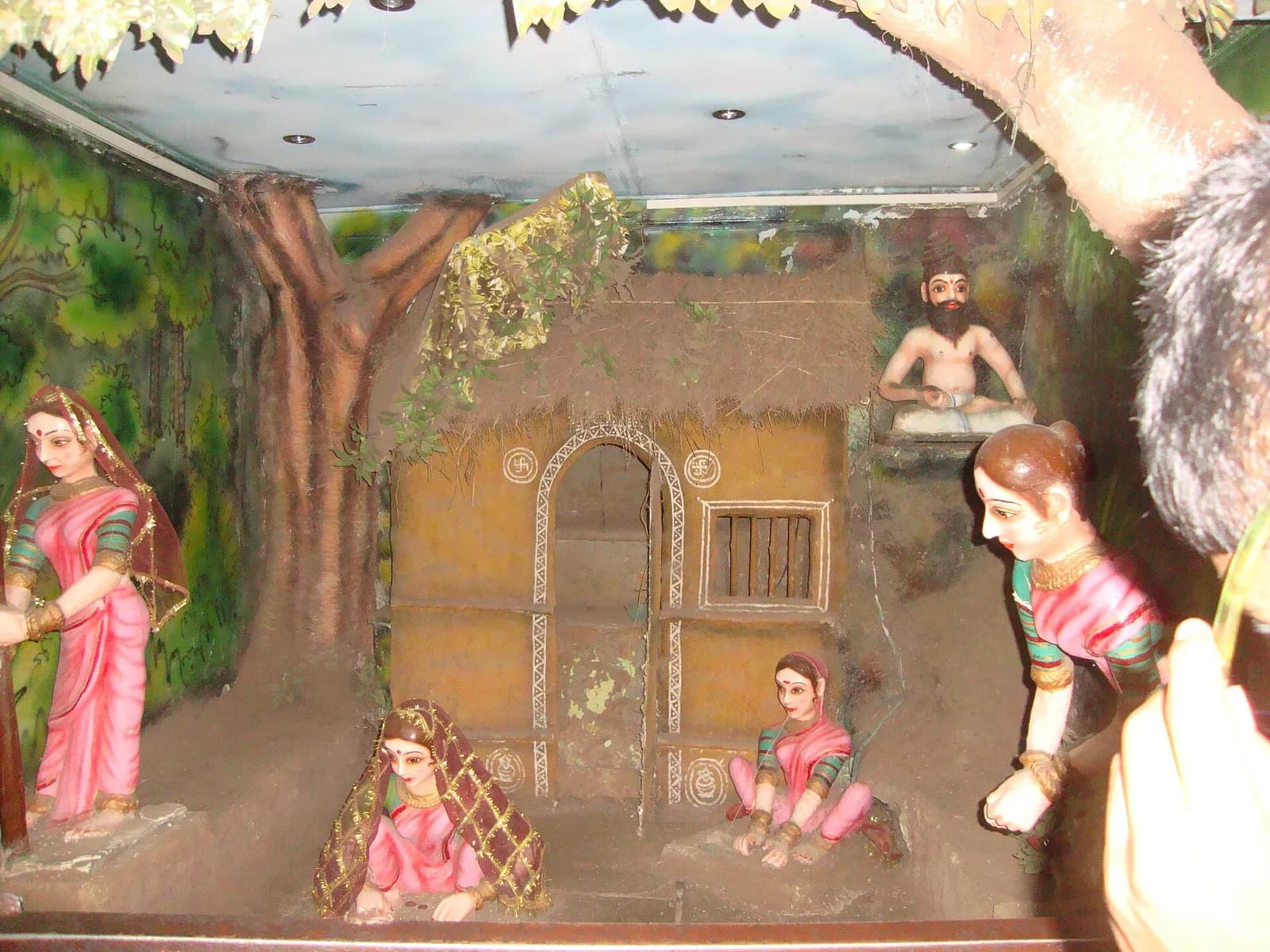
Tradition also places one of the best-known episodes of the Ramayana here: Lakshmana cutting off Shurpanakha’s nose (nasika), the story that is said to give Nashik its name.
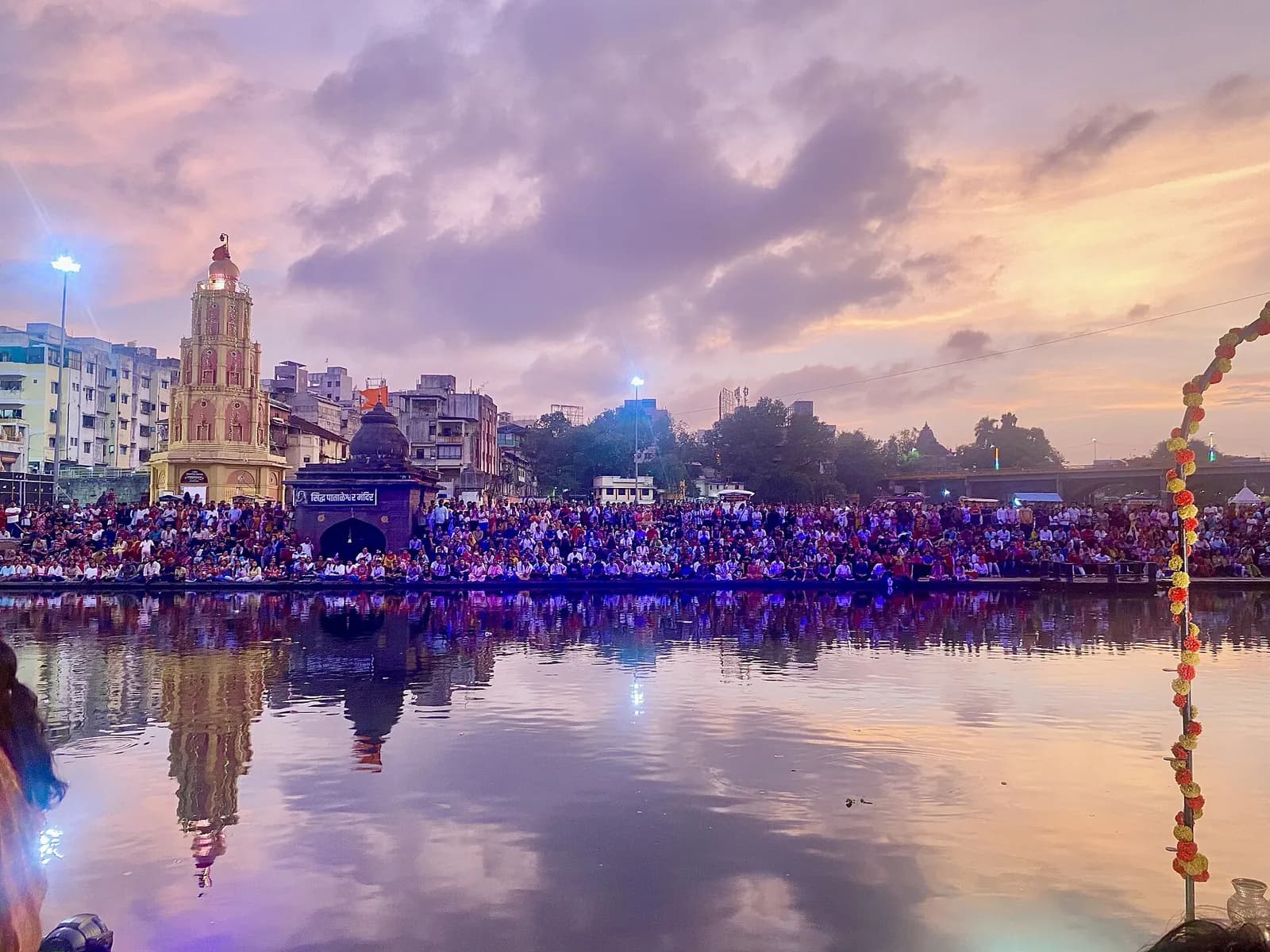
During the Simhastha, the open ground of Tapovan turns into Sadhugram, a city of tents where the akhadas camp with their sadhus, flags and kitchens. The great processions to the Amrit Snan set out from here.
Nashik’s sadhu tradition runs deep. The Ujjain Simhastha is said to have begun in the 18th century when the Maratha ruler Ranoji Shinde invited ascetics from Nashik to a festival in Ujjain.
Did you know?
Tradition places the episode of Lakshmana cutting Shurpanakha's nose (nasika) at Tapovan, which is said to give Nashik its name.
Tapovan lies where the Kapila river joins the Godavari, a confluence that is sacred in itself.
During the Simhastha, Tapovan becomes Sadhugram, the tent city where akhadas and lakhs of sadhus camp.
Utsav
Akhada camps & processions
Simhastha 2026–28
Before you go
FAQ
Many camps welcome respectful visitors at set times. Follow the camp's rules and ask before taking photos.
It is about 2 km from Ramkund by road. Shuttle buses are expected during the Kumbh.