Black-stone Ram temple, Panchavati.
Sthal mahatmya
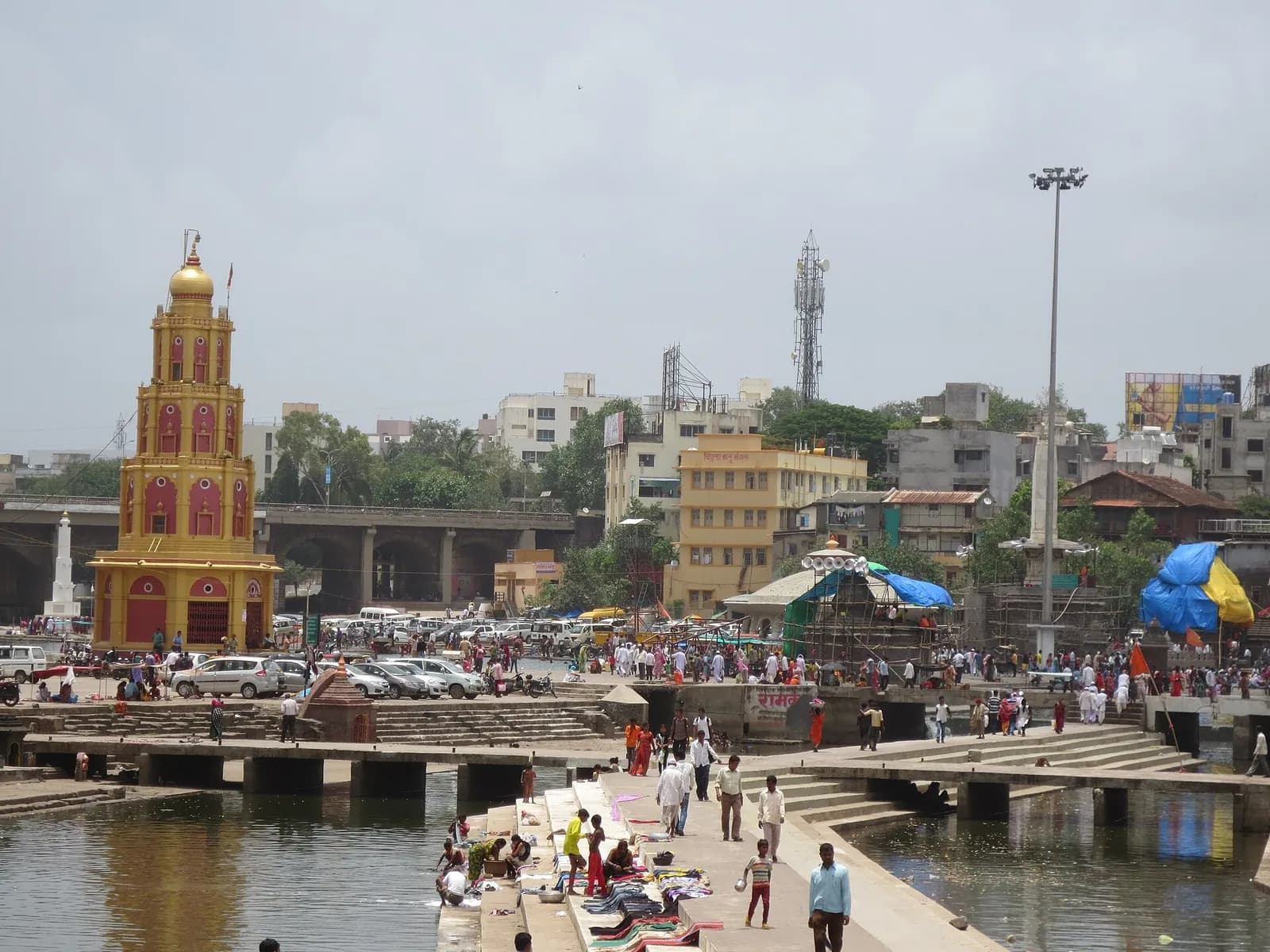
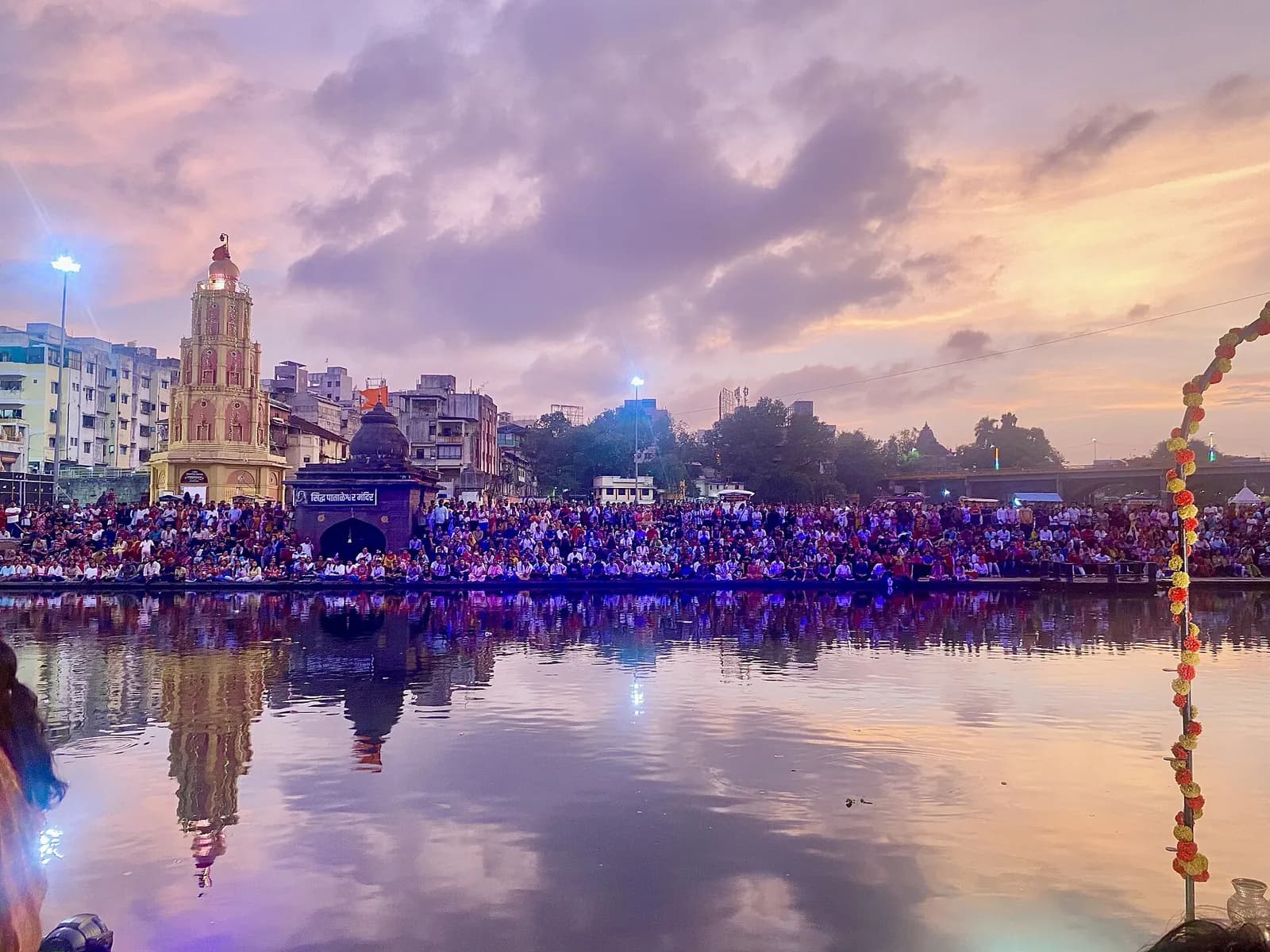
Kalaram Mandir is named after its black stone idol of Lord Rama. It is one of the most visited temples in Panchavati and a short walk from Ramkund.
The temple is also remembered for the 1930 temple-entry satyagraha led by Dr. B. R. Ambedkar.
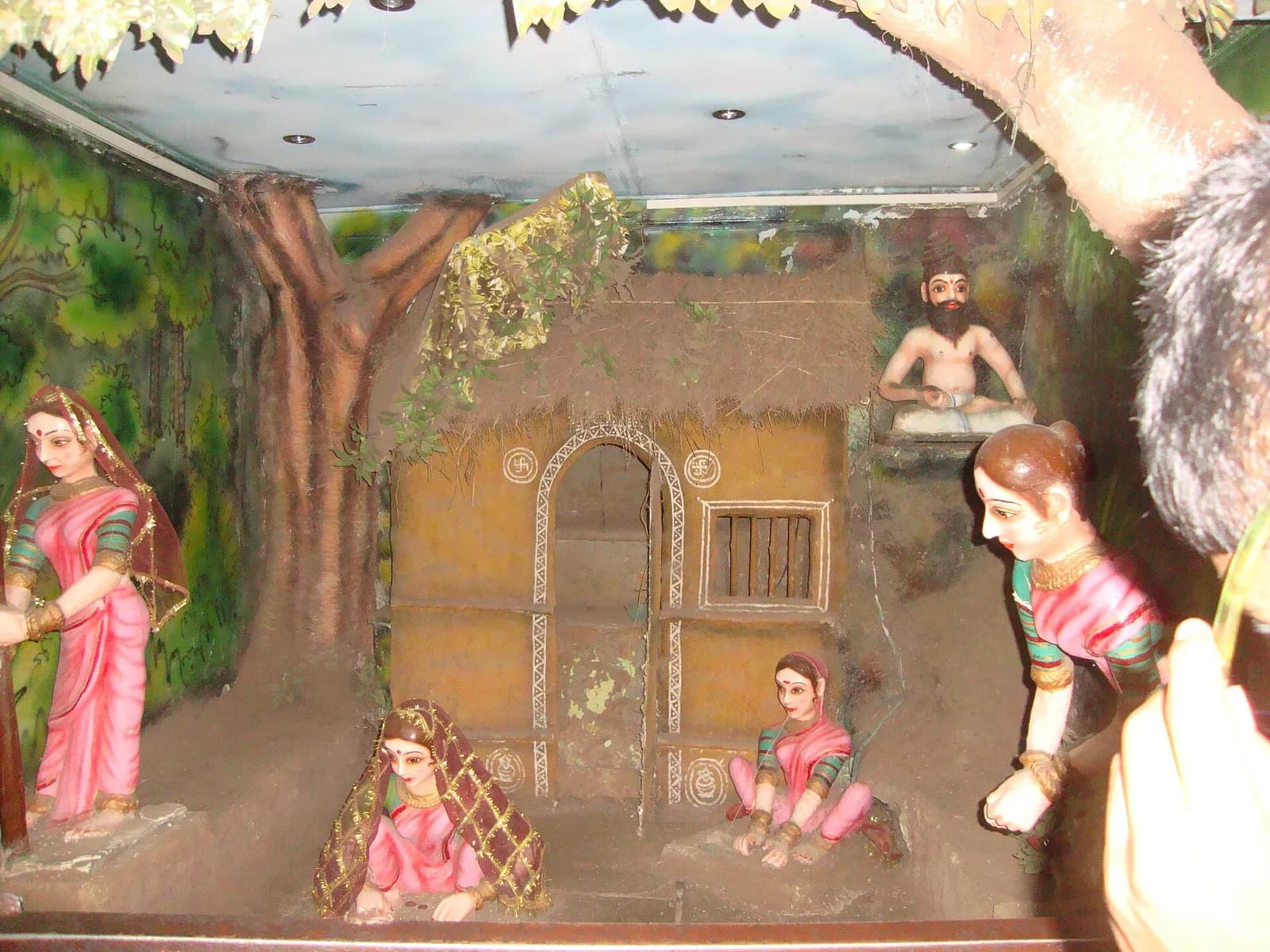
According to the Ramayana, after ten years of their exile Rama, Sita and Lakshmana came to the north bank of the Godavari and lived here for about two and a half years. The forest they lived in is Panchavati, and Kalaram stands at its heart.
An old account says that during the early invasions the temple priests threw the idol into the Godavari to save it. Centuries later, Sardar Rangarao Odhekar dreamt that a black idol of Rama lay in the river. He searched, found it, and had it consecrated again by a saint.
Odhekar then rebuilt the temple; it was completed around 1790. A statue of him stands inside the temple. The site itself is far older, and the first shrine here may date from the Rashtrakuta period (7th to 11th century).
A black-stone Hanuman faces the sanctum from the main entrance, placed so that he can always see Rama. The main temple is reached by 14 steps, said to stand for the 14 years of exile, and is held up by 84 pillars.
Look also for the very old tree in the complex, with a stone said to carry the footprints of Dattatreya. Many pilgrims walk on from here to Kapaleshwar Mandir nearby.
On 2 March 1930, Dr. B. R. Ambedkar led thousands of Dalit protesters to the temple to demand the right to enter it. They surrounded the temple, sang and stayed day after day.
On Ram Navami, 9 April 1930, the protesters tried to stop the chariot procession and violence broke out; Ambedkar himself was hurt. The struggle went on until 1935 and became a landmark in the movement for equal rights.
Did you know?
The temple is named after its black-stone idols of Rama, Sita and Lakshmana. 'Kala Ram' means the dark Rama.
Legend says Sardar Rangarao Odhekar dreamt the idols lay in the Godavari, found them at Ramkund and built this temple, completed in 1792.
The 14 steps are said to stand for Rama's 14 years of exile, and the 84 pillars for the 84 lakh births of the soul.
The black basalt was brought from the Ramshej hills near Nashik, and the temple took about twelve years to build.
Dr. B. R. Ambedkar led the Kalaram temple-entry satyagraha here in 1930, a landmark in the fight for equal rights.
Puja & seva
Utsav
Ram Navami
Chaitra (March–April)
Rath Yatra
Chaitra Ekadashi, after Ram Navami
Hanuman Jayanti
Chaitra Purnima
Vijayadashami
Ashwin (October)
Before you go
FAQ
Usually 5 AM to 10 PM, with aarti at dawn, noon, evening and night. Timings change on festivals.
No. Darshan at Kalaram Mandir is free.
They are carved from black stone. Tradition says they were found in the Godavari at Ramkund before the temple was built.
Panchavati lanes are narrow. Park in the paid lots near Ramkund or Panchavati Karanja and walk; during the Kumbh use outer parking and shuttles.